Use-case 1: data are retrieved automatically by queries
Note
This analysis is inspired by the study carried out by Ozisik et al., [1].
In this use-case, we want to study the molecular relationship between vitamin A and rare diseases.
Vitamin A target genes are retrieved directly from the the Comparative Toxicogenomics Database [2] (CTD). Rare disease pathways are retrieved from WikiPathways [3]. Biological networks used are also downloaded automatically from the Network Data Exchange [4].
Input data and Output results data are available in GitHub.
This section presents you how to apply the three different approaches proposed.
Overlap analysis
The Overlap analysis searches intersecting genes between vitamin A target genes and genes involved in rare disease pathways. See Overlap analysis page for more details.
Running Overlap analysis with data retrieved automatically from databases
The chemicalsFile.csv file [FORMAT] contains the MeSH ID of vitamin A (D014801). We retrieved
from CTD, genes targeted by the vitamin A and its descendant chemicals (--directAssociation FALSE). We keep only
vitamin A - gene interactions which have at least two associated publications (--nbPub 2).
Rare disease pathways are retrieved automatically from WikiPathways.
Results files are saved into useCases/OutputResults_useCase1/ folder.
odamnet overlap --chemicalsFile useCases/InputData/chemicalsFile.csv \
                --directAssociation FALSE \
                --nbPub 2 \
                --outputPath useCases/OutputResults_useCase1/
Several files are generated:
CTD_request_D014801_2022_09_07.tsvandCTD_requestFiltered_D014801_2022_09_07.tsv: the first file contains results from CTD query and the second one contains the results filtered using the publication number.WP_RareDiseases_request_2022_09_07.gmtandWP_allPathways_request_2022_09_07.gmt: the first file contains human rare disease pathways and the second file contains all human pathways retrieved in WikiPathways.Overlap_D014801_withRDWP.csv: results of the Overlap analysis between vitamin A target genes and rare disease pathways.
For more details about these files, see Query output files and Overlap analysis output files sections.
Results of Overlap analysis with data retrieved automatically from databases
Queries made on September 7th, 2022
CTD query results
We retrieved 7,765 genes targeted by 10 chemicals (vitamin A + nine descendant chemicals) in CTD (Table 2). Chemical - gene associations are kept if they have at least two publications for human. After filtering, we have 2,143 vitamin A target genes for 7 chemicals (vitamin A + its descendant molecules).
Number of chemicals |
Number of target genes |
|
|---|---|---|
Query result |
10 |
7,765 |
After filtering by associated publications number |
7 |
2,143 |
WikiPathways query results
All human pathways labeled as “rare disease” are retrieved from WikiPathways. We retrieved 104 rare disease pathways (Table 3). All human pathways are also retrieved from WikiPathways (Table 3). We use these pathways to create background gene sets used for statistical analysis.
Pathways number |
Min genes number |
Max genes number |
|
|---|---|---|---|
Rare Disease Pathways |
104 |
3 |
436 |
All Human WikiPathways |
1,281 |
1 |
484 |
Overlap analysis results
We performed an Overlap analysis between vitamin A target genes (2,143) and rare disease pathways (104). We obtained significant overlap between target genes and 28 rare disease pathways (pAdjusted <= 0.05). The top 5 is presented in Table 4.
PathwayIDs |
PathwayNames |
pAdjusted |
IntersectionSize |
|---|---|---|---|
WP5087 |
Malignant pleural mesothelioma |
3.77e-24 |
146 |
WP4298 |
Acute viral myocarditis |
9.38e-16 |
45 |
WP2447 |
Amyotrophic lateral sclerosis (ALS) |
1.04e-11 |
25 |
WP5053 |
Development of ureteric collection system |
2.61e-08 |
28 |
WP4879 |
Overlap between signal transduction pathways … |
7.80e-07 |
25 |
In a previous analysis [1], an overlap analysis was performed between vitamin A and Congenital Anomalies of the Kidney and Urinary Tract (CAKUT). Four pathways related to CAKUT were identified in WikiPathways. Significant overlaps were identified between these four CAKUT pathways and vitamin A target genes.
With updated target genes data proposed here, we also retrieved significant overlap for 3 of these 4 CAKUT pathways (Table 5).
Current analysis |
Ozisik et al., 2021 |
||||
|---|---|---|---|---|---|
PathwayIDs |
Pathway Names |
pAdjusted |
Inter |
pAdjusted |
Inter |
WP5053 |
Development of ureteric collection … |
2.61e-08 |
28 |
1.59e-05 |
16 |
WP4830 |
GDNF/RET signaling axis |
1.99e-05 |
13 |
1.57e-03 |
8 |
WP4823 |
Genes controlling nephrogenesis |
8.72e-05 |
18 |
1.84e-05 |
15 |
WP5052 |
Nephrogenesis |
0.09 |
6 |
1.90e-04 |
8 |
The increase of the intersection size (Inter column) can be explained by the target gene size. In the previous work [1], we retrieved 1,086 target genes and in this current work we retrieved 2,143 target genes.
The overlap between Nephrogenesis pathway and target genes is not found significant anymore. Number of target genes shared with the pathway is smaller. It affects the p-value and decreases it below the 0.05 threshold.
The smaller number of shared genes can be explained by the fact that one of the target gene is not related to human so it’s not selected and the other one has only one publication associated and we keep those with at least two publications.
Active Module Identification (AMI)
The Active Module Identification (AMI) approach identifies active module that contains high number of vitamin A target genes using a protein-protein interaction (PPI) network. AMI is performed using DOMINO [5]. Then, an Overlap analysis is applied between identified active modules and rare disease pathways. See Active Module Identification page for more details.
Running AMI with data retrieved automatically from databases
Warning
When using DOMINO server, results cannot be identically reproduced. Indeed, DOMINO server doesn’t allow to set the random seed. This random seed changes every new analysis.
The chemicalsFile.csv file [FORMAT] contains the MeSH ID of vitamin A (D014801). We retrieved
from CTD, genes targeted by the vitamin A and its descendant chemicals (--directAssociation FALSE). We keep only
vitamin A - gene interactions which have at least two associated publications (--nbPub 2).
We download automatically a PPI network [FORMAT] from NDEx [4] using the --netUUID parameter
(UUID bfac0486-cefe-11ed-a79c-005056ae23aa, version 1.0). We named the PPI network PPI_HiUnion_LitBM_APID_gene_names_190123.sif
(--networkFile). Network name should be with .sif extension.
Results files are saved into useCases/OutputResults_useCase1/ folder.
odamnet domino  --chemicalsFile useCases/InputData/chemicalsFiles.csv \
                --directAssociation FALSE \
                --nbPub 2 \
                --networkFile useCases/InputData/PPI_HiUnion_LitBM_APID_gene_names_190123.sif \
                --netUUID bfac0486-cefe-11ed-a79c-005056ae23aa \
                --outputPath useCases/OutputResults_useCase1
Several files are generated:
CTD_request_D014801_2022_09_07.tsvandCTD_requestFiltered_D014801_2022_09_07.tsv: the first file contains results from CTD query and the second one contains the results filtered using the publication number.WP_RareDiseases_request_2022_09_07.gmtandWP_allPathways_request_2022_09_07.gmt: the first file contains human rare disease pathways and the second file contains all human pathways retrieved in WikiPathways.DOMINO_inputGeneList_D014801.txt: vitamin A target genes list used for the active module identification.Overlap_AM_*_D014801_withRDWP.csv: results of the Overlap analysis between identified active modules genes and rare disease pathways. There is one file per active module.DOMINO_D014801_activeModulesNetwork.txt,DOMINO_D014801_overlapAMresults4Cytoscape.txt,DOMINO_D014801_activeModules.txt,DOMINO_D014801_activeModulesMetrics.txtandDOMINO_D014801_signOverlap.txt: some statistics are calculated and saved into files. Theses files are useful for visualisation.
For more details about these files, see Query output files and AMI output files sections.
Results of AMI with data retrieved automatically from databases
Queries made on September 7th, 2022
CTD query results
We retrieved 7,765 genes targeted by 10 chemicals (vitamin A + nine descendant chemicals) in CTD (Table 6). Chemical - gene associations are kept if they have at least two publications for human. After filtering, we have 2,143 vitamin A target genes for 7 chemicals (vitamin A + its descendant molecules).
Number of chemicals |
Number of genes |
|
|---|---|---|
Query result |
10 |
7,765 |
After filtering by publication number |
7 |
2,143 |
WikiPathways query results
All human pathways labeled as “rare disease” are retrieved from WikiPathways. We retrieved 104 rare disease pathways (Table 7). All human pathways are also retrieved from WikiPathways (Table 7). We use these pathways to create background gene sets used for statistical analysis.
Pathways number |
Min genes number |
Max genes number |
|
|---|---|---|---|
Rare Disease Pathways |
104 |
3 |
436 |
All Human WikiPathways |
1,281 |
1 |
484 |
PPI network information
The PPI network is automatically downloaded from NDEx. It was build from 3 datasets: Lit-BM, Hi-Union and APID. It contains 15,390 nodes and 131,087 edges.
For more details about the PPI network, see Protein-Protein Interaction (PPI) network section.
AMI results
DOMINO defines vitamin A target genes as active genes and searches active modules enriched in active genes. Over the 2,143 target genes retrieved from CTD, 1,937 are found in the PPI and used as active genes by DOMINO. DOMINO identified 12 active modules enriched in vitamin A target genes (Table 8).
Min number |
Max number |
|
|---|---|---|
Edges |
20 |
357 |
Nodes |
17 |
93 |
Target genes |
8 |
35 |
See DOMINO_D014801_activeModulesNetworkMetrics.txt file for more details.
Overlap analysis results
Then, we perform an Overlap analysis between identified active modules (12) and rare disease pathways (104). We obtained significant overlap between 6 active modules and 19 rare disease pathways (pAdjusted <= 0.05). The top 5 is presented in Table 9.
Pathway IDs |
Pathway Names |
pAdjusted |
|---|---|---|
WP5087 |
Malignant pleural mesothelioma |
2.78e-25 |
WP4541 |
Hippo-Merlin signaling dysregulation |
4.37e-07 |
WP4577 |
Neurodegeneration with brain iron accumulation (NBIA) subtypes … |
2.84e-06 |
WP5053 |
Development of ureteric collection system |
1.23e-05 |
WP4540 |
Hippo signaling regulation pathways |
1.55e-05 |
Duplicates between active modules results are removed and we keep the more significant ones.
See DOMINO_D014801_signOverlap.txt file for more details.
Visualisation of AMI results
We created a visualisation of AMI results (Fig. 19) using Cytoscape [6].
We found a significant overlap between 6 active modules and 19 rare disease pathways. For sake of visualisation,
we selected only three of them (Fig. 19). You can find the entire visualisation in the cytoscape
project called AMI_visualisation.cys in GitHub.
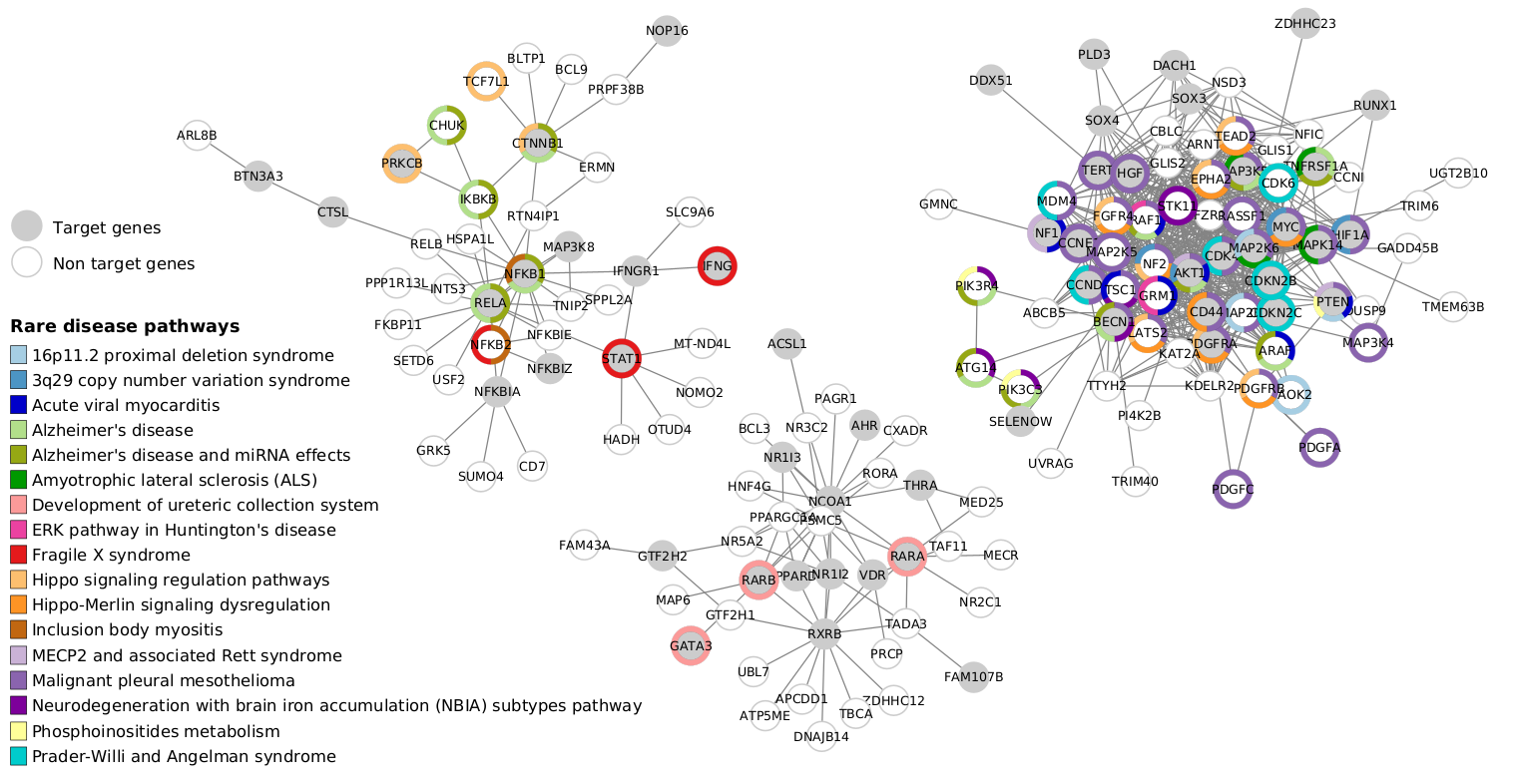
Fig. 19 : Visualisation of 3 active modules and their associated rare disease pathways
Genes are represented by nodes. Grey nodes are the target genes, white nodes are non-target genes. Overlap results between active modules and rare disease pathways are displayed using donuts color around nodes. Each color corresponds to a rare disease pathways. Creation steps are explained in the Active module identification results visualisation section.
Module topology is different between modules and associated rare diseases pathways also vary (Fig. 19). For instance, the module on the right is very connected and contains genes that are involved in a lot of rare disease pathways. Genes, such as PTEN, are part of at least 5 pathways. The two other modules are sparser. The module in the middle contains genes involved only in Development of ureteric collection system.
Random Walk with Restart (RWR)
The Random Walk with Restart (RWR) approach mesures proximities between vitamin A target genes and rare disease pathways. To calculate these proximities (RWR scores), we used multiXrank [7] and multilayer networks. See Random Walk with Restart page for more details.
The multilayer network is composed of three gene networks and one rare disease pathways network. Genes nodes are connected to disease nodes if they are involved in. See Networks used page for more details.
Running RWR with data retrieved automatically from databases
The chemicalsFile.csv file [FORMAT] contains the MeSH ID of vitamin A (D014801). We retrieved
from CTD, genes targeted by the vitamin A and its descendant chemicals (--directAssociation FALSE). We keep only
vitamin A - gene interactions which have at least two associated publications (--nbPub 2).
multiXrank needs as input a configuration file (--configPath) that contains path of networks and analysis parameters.
We used multiXrank with default parameters.
We provide a name file to save vitamin A target genes (i.e. seeds) --seedsFile useCases/InputData/seeds.txt and
also a SIF file name (--sifFileName) to save the top nodes based on RWR scores (--top 20).
Results files are saved into useCases/OutputResults_useCase1/ folder.
odamnet multixrank  --chemicalsFile useCases/InputData/chemicalsFile.csv \
                    --directAssociation FALSE \
                    --nbPub 2 \
                    --configPath useCases/InputData/config_minimal_useCase1.yml \
                    --networksPath useCases/InputData/ \
                    --seedsFile useCases/InputData/seeds.txt \
                    --sifFileName UseCase1_RWR_network.sif \
                    --top 20 \
                    --outputPath useCases/OutputResults_useCase1/
Tip
Several files are generated:
CTD_request_D014801_2022_09_07.tsvandCTD_requestFiltered_D014801_2022_09_07.tsv: the first file contains results from CTD query and the second one contains the filtered by publication number.RWR_D014801/folder with the RWR results:config_minimal_useCase1.ymlandseeds.txt: copies of the input filesmultiplex_1.tsvandmultiplex_2.tsv: RWR scores for each multilayer. 1 is the genes multilayer network RWR scores and 2 is the rare disease pathways network RWR scores.UseCase1_RWR_network.sif: SIF file name that contains the network resultRWR_topX.txt: Top X of rare disease pathways
For more details about these files, see Query output files and RWR output files sections.
Results of RWR with data retrieved automatically from databases
Queries made on September 7th, 2022
CTD query results
We retrieved 7,765 genes targeted by 10 chemicals (vitamin A + nine descendant chemicals) in CTD (Table 10). Chemical - gene associations are kept if they have at least two publications for human. After filtering, we have 2,143 vitamin A target genes for 7 chemicals (vitamin A + its descendant molecules).
Number of chemicals |
Number of genes |
|
|---|---|---|
Request result |
10 |
7,765 |
After filtering by papers number |
7 |
2,143 |
RWR results
Analysis with rare disease pathways network
We used a multilayer network composed of three gene networks and one rare disease pathways network (Fig. 18 - left, Genes multilayer network and Rare disease pathways network).
multiXrank defines vitamin A target genes as seeds. Over the 2,143 target genes retrieved from CTD, 2,012 are found in the multilayer and used as seeds. Using the RWR scores (i.e. proximity score with the target genes), rare disease pathways are prioritized. We selected the top 20 and presented the top 5 (Table 11).
Nodes (pathway IDs) |
Pathway Names |
RWR scores |
|---|---|---|
WP5087 |
Malignant pleural mesothelioma |
2.85e-03 |
WP4673 |
Male infertility |
9.02e-04 |
WP2059 |
Alzheimer’s disease and miRNA effects |
7.76e-04 |
WP5124 |
Alzheimer’s disease |
7.76e-04 |
WP4298 |
Acute viral myocarditis |
0.000731 |
We created a visualisation of the results (Fig. 20) using Cytoscape [6]. You can retrieved it in the
cytoscape project called RWR_visualisation.cys in GitHub. The Fig. 20 presents the top 5 of rare
disease pathways, ordered by RWR score.
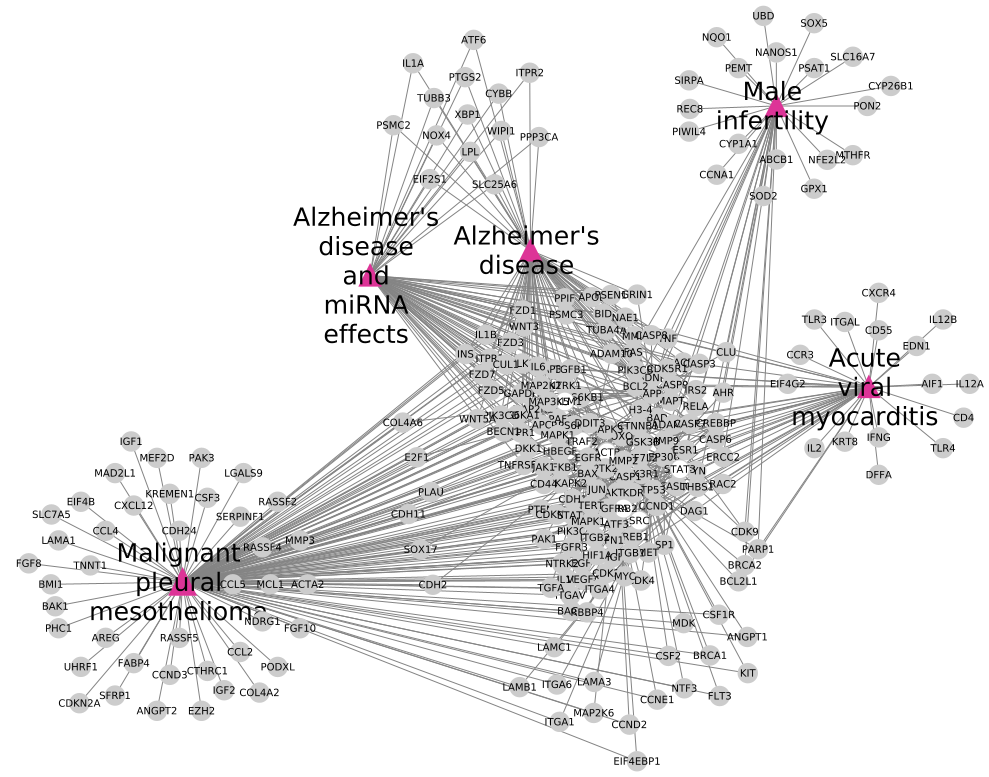
Fig. 20 : Top 5 of the rare disease pathways prioritized using RWR score using a (disconnected) rare disease pathways network
Rare disease pathways are in pink triangles. Target genes are in grey and non-target genes are in white. Creation steps are explained in the Random walk with restart results visualisation section.
Extra : analysis with disease-disease similarity network
Tip
Same command line, but needs to change configuration file.
We also propose to run an RWR approach using a disease-disease similarity network. In this network, rare diseases are linked together according their phenotype similarity whereas in the previous network they were not at all connected.
We used a multilayer network composed of three genes network and one disease-disease similarity network (Fig. 18 - right, Genes multilayer network, Disease-disease similarity network).
multiXrank defines vitamin A target genes as seeds. Over the 2,143 target genes retrieved from CTD, 2,012 are found in the multilayer and used as seeds. Using the RWR scores (i.e. proximity score with the target genes), rare disease are prioritized. We selected the top 20 and presented the top 5 (Table 12).
Nodes (disease IDs) |
Disease Names |
RWR scores |
|---|---|---|
OMIM:601626 |
Leukemia, acute myeloid |
1.68e-04 |
OMIM:114500 |
Colorectal cancer |
1.61e-04 |
OMIM:125853 |
Diabetes mellitus, noninsulin-dependent |
1.60e-04 |
OMIM:114480 |
Breast cancer |
1.20e-04 |
OMIM:211980 |
Lung cancer, susceptibility to |
1.16e-04 |
We created a visualisation of the results (Fig. 21) using Cytoscape [6]. You can retrieved it in
the cytoscape project called RWR_visualisation.cys in GitHub. The Fig. 21 presents the
top 5 of rare disease pathways, ordered by RWR score.
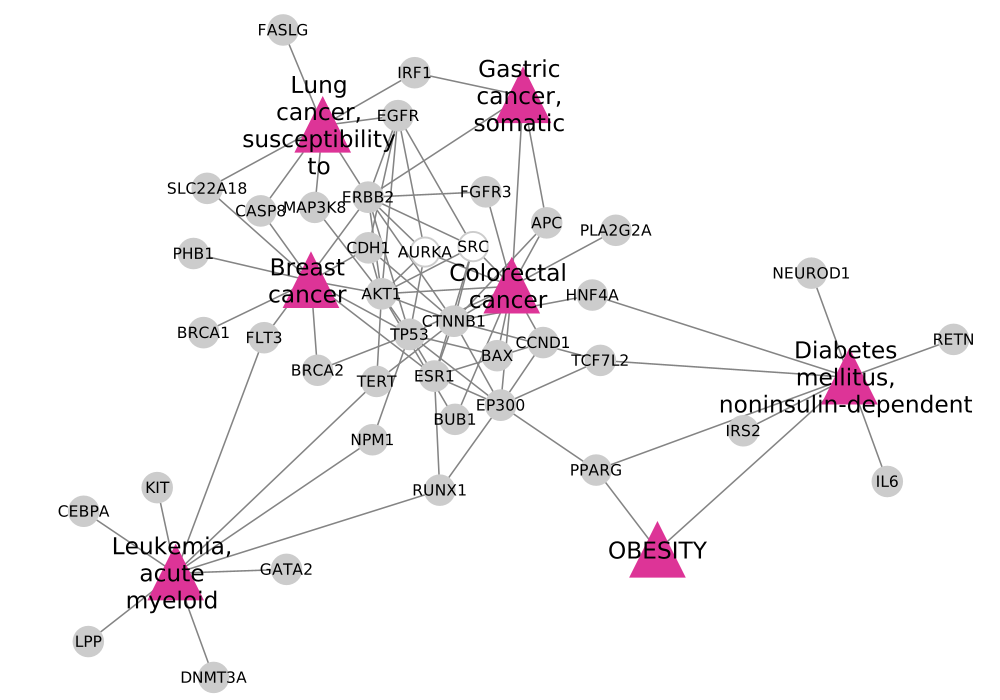
Fig. 21 : Top 5 of the rare disease prioritized using RWR score using disease-disease similarity network
Rare disease are in pink triangles. Target genes are in grey and non-target genes are in white. Creation steps are explained in the Random walk with restart results visualisation section.
Overlap, AMI and RWR results comparison
We compare results obtained with the three different approaches: Overlap analysis, Active Module Identification (AMI) and Random Walk with Restart (RWR). We used orsum [8], a Python package to filter and integrate enrichment analysis from several analyses. The main result is a heatmap, presented in Fig. 22.
orsum.py --gmt 00_Data/WP_RareDiseases_request_2022_09_07.gmt \
         --files 00_Data/Overlap_D014801.4Orsum 00_Data/DOMINO_D014801.4Orsum 00_Data/RWR_D014801.4Orsum \
         --fileAliases Overlap AMI RWR \
         --maxRepSize 0 \
         --outputFolder UseCase1_D014801_orsum
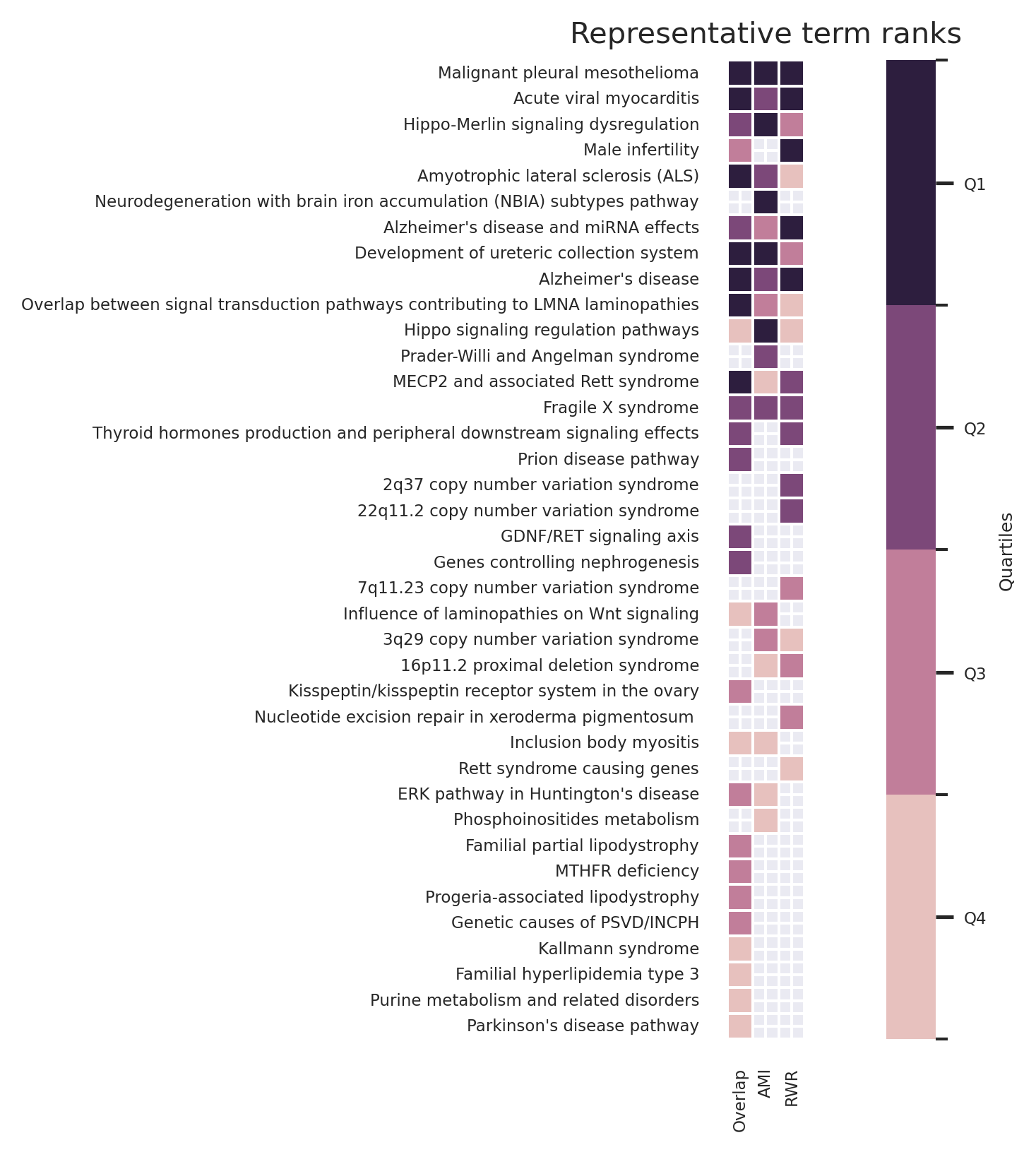
Fig. 22 : Overlap analysis (Overlap), Active module identification (AMI) and Random walk with restart (RWR) results integration and comparison using orsum
The --maxRepSize parameter is set to 0 to consider each term as is own representative term.
Some rare disease pathways are retrieved associated with vitamin A by all the three approaches such as Malignant pleural mesothelioma or Acute viral myocarditis. Some other rare disease pathways are retrieved associated with vitamin A only by one (NBIA subtypes pathway) or two (Male infertility) approaches.